Super Secret Spy Decoder!
Suitable for small children. Make the bigger kids learn the explanation as well.
Transmit a secret message (sort of)
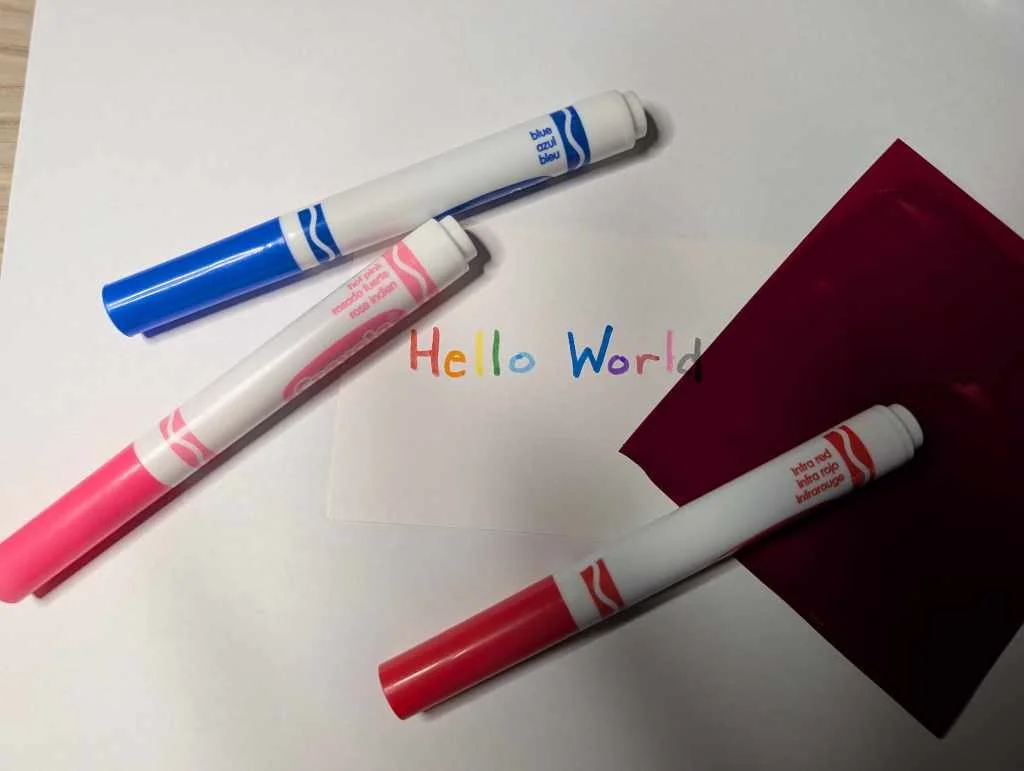
You need markers and color filters.
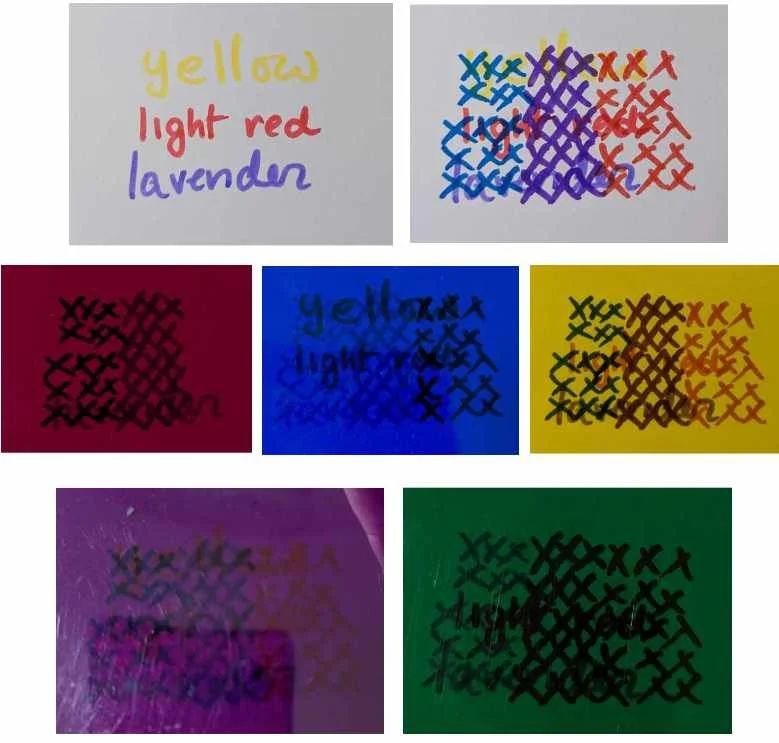
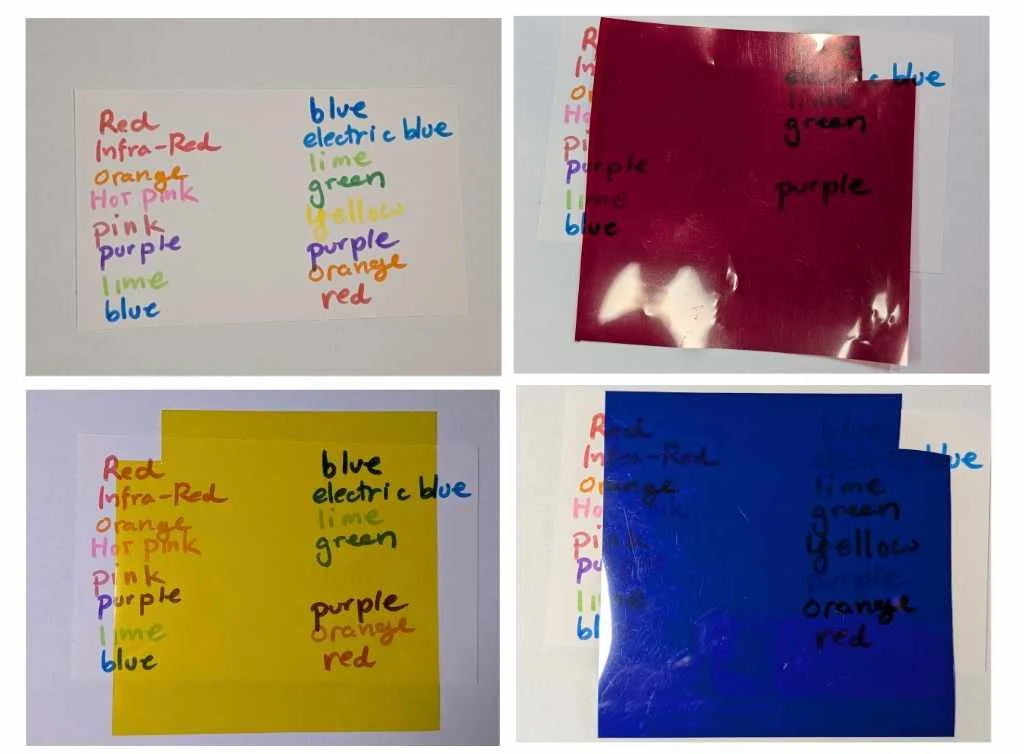
For markers, I suggest the following pairs: RED/LIGHT GREEN for a RED filter, and BLUE/YELLOW for a BLUE filter. You may need to experiment to find which combinations of markers work best with your filter.
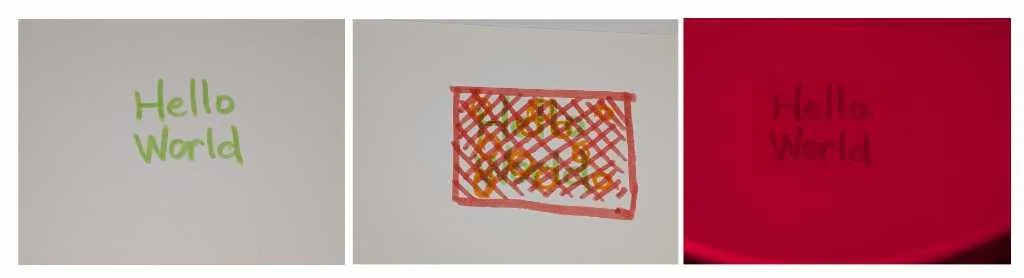
Step 1: Select your message marker. This will be a green marker if you have a red filter, or a yellow marker if you have a blue filter. Write a short message.
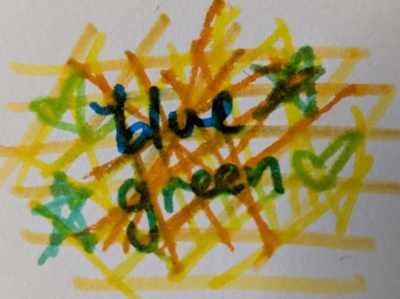
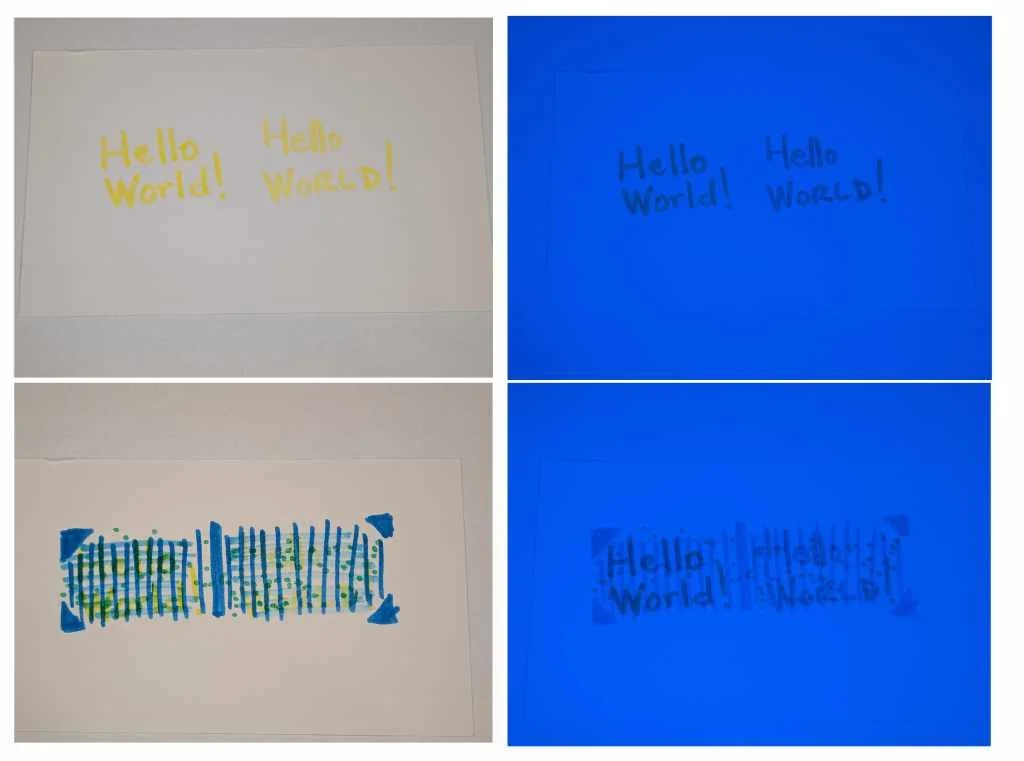
Step 2: “Conceal” the message. Take your other markers (reds and oranges for red filter, blues and greens for blue filter) and draw a busy but not entirely solid cover over the message. You don’t want to just color a solid block of color over the message, that won’t hide it. You want color AND chaos.
Step 3: Reveal. Place the filter over the mess to reveal the message! If you selected the right colors for each step, most if not all of the messy cover drawing should vanish, and the message should appear dark and clear.
What’s Going On?
Questions:
Why did the website example use a light green rather than a dark green?
Why don’t we just color a solid block over the message? (Try it)
There’s a yellow filter in the example pictures, why didn’t we choose a yellow filter in the project instructions?
White light, as we all know, contains the entire rainbow. Every color in the electromagnetic spectrum is present in white light. When a white piece of paper reflects that back, it reflects everything. If write Hello World with a green marker, then the green section reflects the green light back at you, and absorbs the rest. Same deal for the other colors. Parts of the white light are absorbed, parts are reflected back. The specific color and its lightness or darkness depends on which (and how much) of each part of the electromagnetic spectrum is absorbed and which (and how much) is reflected.
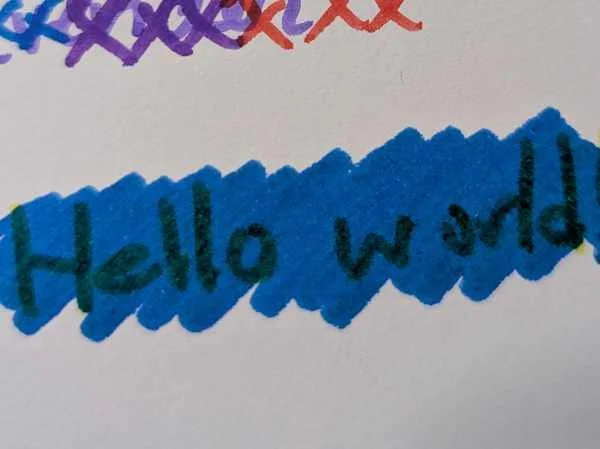
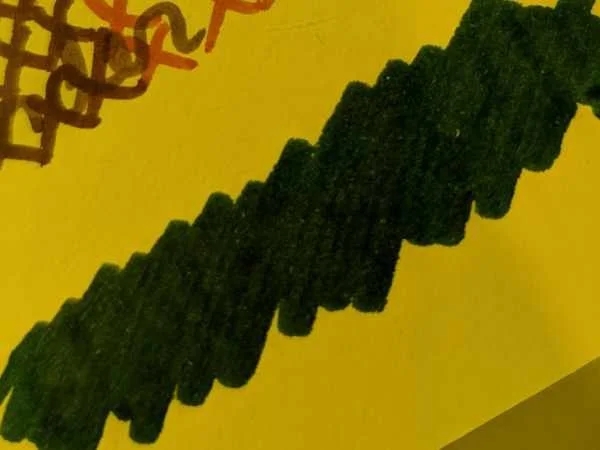
Now it’s important for our demo that Crayola markers are a bit transparent - when you layer two colors you can always see a bit of the first color under the second. If you tried to cover the message in a solid block of color, you may have noticed that you could still read the message. In the picture above, you can see that the parts of the red and orange that overlap the green writing result in a blackish color. We need that transparency (otherwise we’ll never see the message) but it also means this isn’t a perfect message hiding technique. Making a busy image helps distract the eye from the darker patterns that happen when the two colors overlap.
When you put the filter over the image, the filter absorbs all colors except red, it lets red go through. The red and orange reflect it back but you can’t tell, it all looks the same. The green absorbs it, making the message look dark. The white background and red/orange colored areas are reflecting whatever they see, the green message behaves differently.
Your success will depend on which parts of the EM spectrum the filters and markers are absorbing and reflecting. This will be a bit different for each filter and each marker. That’s why you will find some combinations of yellow, blue and green or green orange and red markers work better with certain filters.
Some Answers
Why use the lighter colors for the message and darker for the mess?
This is a quirk of the markers. The lighter colors (yellow, light green) can not obscure the dark, bold colors like red and blue. Use the filters and you’ll see the physics is still working, it is just failing to be a secret message.Why are we favoring the yellow/blue and red/green combos?
We want to stick with primary/secondary combinations because that ensures the cleanest separation between the filtered and unfiltered parts of the image. Using a purple or orange filter means we won’t be able to pick two colors that are (ideally) 100% transmitted and 100% obscured.Why don’t we color a solid block over the message?
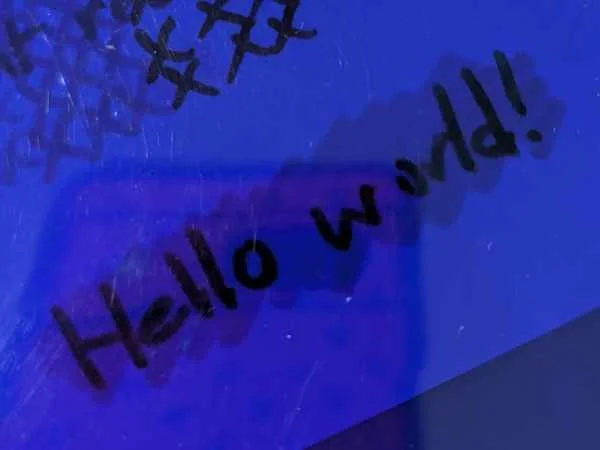
The transparency of the markers means you will be able to clearly see the message with or without the filter. You COULD then use a filter to obscure the message (pic).